A Teacher’s Guide to Finding the Right School Job in Nigeria
Finding the right teaching job involves more than submitting applications. Teachers need to identify suitable roles, prepare a strong CV, research schools, prepare for interviews, evaluate employment conditions, avoid recruitment scams, and continuously develop their professional skills. This guide provides practical steps to help Nigerian teachers find legitimate opportunities and make informed career decisions.
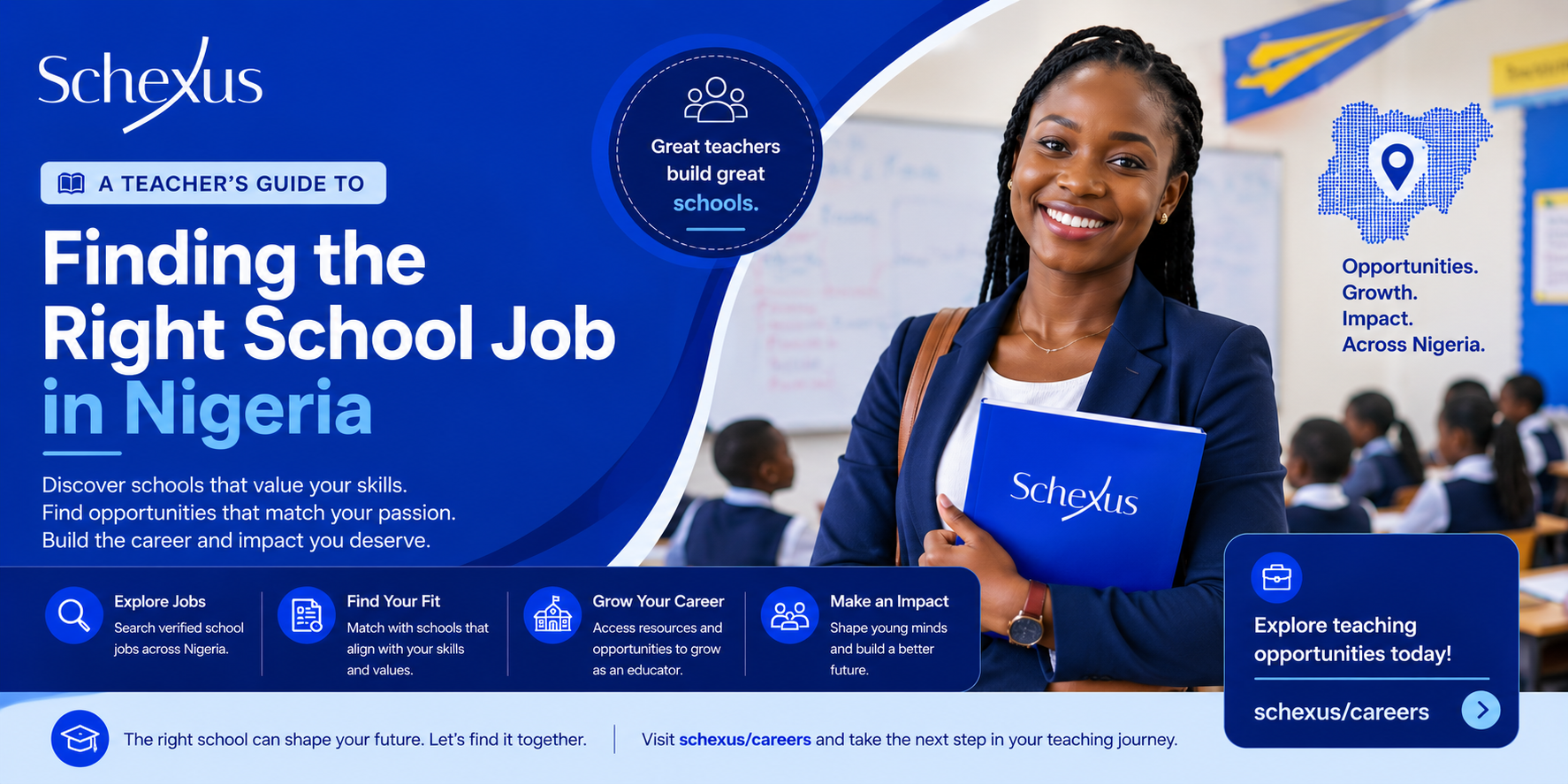
Finding the right teaching job is about more than getting an offer. The school you choose can influence your professional growth, income, workload, classroom experience, and long-term career.
For teachers in Nigeria, the challenge is often knowing where to find genuine opportunities, how to evaluate schools, and how to stand out during the recruitment process.
This guide provides a practical approach to finding and evaluating teaching opportunities.
1. Know What You Are Looking For
Before applying for teaching jobs, define the type of school and role you want.
Consider:
-
Subject or subjects you are qualified to teach
-
Primary or secondary education
-
Your preferred location
-
Full-time or part-time work
-
Your teaching experience
-
Your academic and professional qualifications
-
Salary expectations
-
Opportunities for professional development
-
School environment and workload
Having clear criteria helps you focus on opportunities that actually fit your career goals.
2. Prepare a Professional Teaching CV
Your CV is often the first impression a school gets of you.
A good teaching CV should clearly present:
-
Your full name and contact information
-
Educational qualifications
-
Teaching certifications
-
Teaching experience
-
Subjects and classes taught
-
Relevant skills
-
Professional development and training
-
Achievements and responsibilities
-
References, where appropriate
Avoid making your CV unnecessarily long. Focus on information that demonstrates your ability to contribute to a school.
Highlight measurable achievements
Instead of simply writing:
Taught Mathematics to secondary school students.
Consider explaining the responsibility or outcome more clearly, such as:
Taught Mathematics across multiple secondary school classes and supported students through examination preparation and continuous assessment.
The goal is to help a school quickly understand your experience and capabilities.
3. Search Beyond Traditional Job Boards
Teachers can discover opportunities through several channels.
Look at:
-
School websites
-
Education job platforms
-
Professional networks
-
Teacher communities
-
School social media pages
-
Education events
-
Professional associations
-
Referrals from other educators
A growing digital education ecosystem also makes it easier for schools and educators to connect directly.
Schexus is building tools that connect teachers with schools, opportunities and the wider education ecosystem.
4. Research the School Before Applying
Don't apply blindly to every teaching vacancy.
Research the school first.
Look for information about:
-
Location
-
School type
-
Curriculum
-
Subjects offered
-
Student population
-
School leadership
-
Working environment
-
Professional expectations
-
Available facilities
-
Public reputation
A school should be evaluating you, but you should also be evaluating the school.
5. Read the Job Description Carefully
Before applying, make sure you understand what the school expects.
Pay attention to:
-
Required qualifications
-
Years of experience
-
Subjects
-
Grade levels
-
Teaching responsibilities
-
Administrative responsibilities
-
Working hours
-
Application deadlines
-
Required documents
If a position requires qualifications or experience you don't have, consider whether you can realistically meet the requirement before applying.
6. Prepare for the Interview
A teaching interview may involve questions about both your subject knowledge and your approach to teaching.
Prepare to discuss:
-
Your teaching experience
-
Classroom management
-
Lesson planning
-
Student assessment
-
Supporting students with different learning needs
-
Communication with parents
-
Use of technology in teaching
-
How you handle classroom challenges
You may also be asked to deliver a demonstration lesson.
Practice explaining a topic clearly and engagingly rather than simply memorizing a lesson plan.
7. Ask Questions During the Interview
An interview should not be one-sided.
Appropriate questions can help you understand whether the position is right for you.
You could ask:
-
What are the main responsibilities of this role?
-
Which classes or subjects would I be teaching?
-
What does a typical school day look like?
-
How does the school support teacher development?
-
How is teacher performance evaluated?
-
What opportunities are available for professional training?
-
What are the expectations outside classroom teaching?
These questions demonstrate that you are thinking seriously about the role.
8. Evaluate the Complete Employment Package
Salary is important, but it isn't the only factor.
Consider the complete employment arrangement, including:
-
Salary
-
Payment schedule
-
Working hours
-
Teaching workload
-
Class size
-
Transportation considerations
-
Leave arrangements
-
Professional development
-
Responsibilities outside teaching
-
Contract terms
-
Opportunities for advancement
A position with a slightly different salary may ultimately be more valuable if it provides better working conditions and professional growth.
9. Be Careful With Job Scams
Teachers should be cautious when responding to unfamiliar recruitment offers.
Be particularly careful when:
-
A job promises unusually high pay with little qualification
-
The recruiter refuses to provide basic information about the school
-
You are pressured to make immediate payments
-
The vacancy cannot be verified
-
Communication comes only through suspicious accounts
-
You are asked for unnecessary sensitive information
Always try to verify the school and the vacancy before sharing important personal information or making any payment.
10. Keep Your Professional Profile Updated
Don't wait until you need a job before updating your professional information.
Keep your:
-
CV
-
Professional profiles
-
Qualifications
-
Certifications
-
Teaching portfolio
-
References
-
Contact information
up to date.
Your next opportunity may come when you are not actively looking.
11. Build Your Teaching Career, Not Just Your Next Job
A teaching position can be the beginning of a long-term professional journey.
Continue developing skills in areas such as:
-
Digital teaching tools
-
Classroom management
-
Educational technology
-
Assessment
-
Curriculum development
-
Communication
-
Leadership
-
Subject-specific expertise
Professional development can make you more competitive for future opportunities.
12. Use Education Platforms to Discover Opportunities
The education sector is becoming increasingly connected through digital platforms.
Instead of relying entirely on informal networks, teachers can use education technology to discover schools, vacancies, professional opportunities and resources.
Schexus is building a connected education ecosystem where schools and educators can interact more easily, while expanding access to opportunities and education services.
A Simple Teacher Job Search Checklist
Before accepting a teaching position, ask yourself:
-
Does the school match my career goals?
-
Is the role clearly defined?
-
Are the employment terms clear?
-
Have I researched the school?
-
Do the responsibilities match the compensation?
-
Is there room for professional development?
-
Can I realistically manage the workload?
-
Have I verified the opportunity?
If the answers are clear, you can make a more informed decision.
Final Thoughts
Finding the right teaching job requires more than sending applications. Teachers need to understand their own career goals, present their skills effectively, research potential employers, prepare for interviews and evaluate employment opportunities carefully.
The education job market is evolving, and technology can make it easier for schools and educators to find each other.
Schexus is building that connection as part of a broader education ecosystem designed to bring schools, teachers, students, parents and education professionals closer together.
Explore Schexus and discover how technology can help create a more connected education experience.
Frequently Asked Questions
Where can teachers find teaching jobs in Nigeria?
Teachers can look for opportunities through school websites, education job platforms, professional networks, teacher communities, referrals and education technology platforms.
What should I include in a teaching CV?
Include your qualifications, certifications, teaching experience, subjects and classes taught, relevant skills, professional development and notable responsibilities or achievements.
How can I know if a teaching job is legitimate?
Research the school, verify the vacancy through official channels, check the school's contact information and be cautious about recruiters requesting unusual payments or unnecessary personal information.
Should teachers ask questions during interviews?
Yes. Asking about responsibilities, workload, professional development, evaluation and working conditions helps you determine whether the position is suitable.
How can teachers improve their chances of getting hired?
Maintain a professional CV, develop relevant skills, prepare thoroughly for interviews, build professional connections and actively monitor legitimate education opportunities.