Serving in a Nigerian School During NYSC: A Guide for Corps Members
Serving in a school during NYSC can be a valuable opportunity to gain teaching, communication, leadership and professional experience. This guide helps corps members understand what to expect at their school PPA, prepare for classroom responsibilities, work effectively with experienced teachers, maintain professional conduct and make the most of their service year.
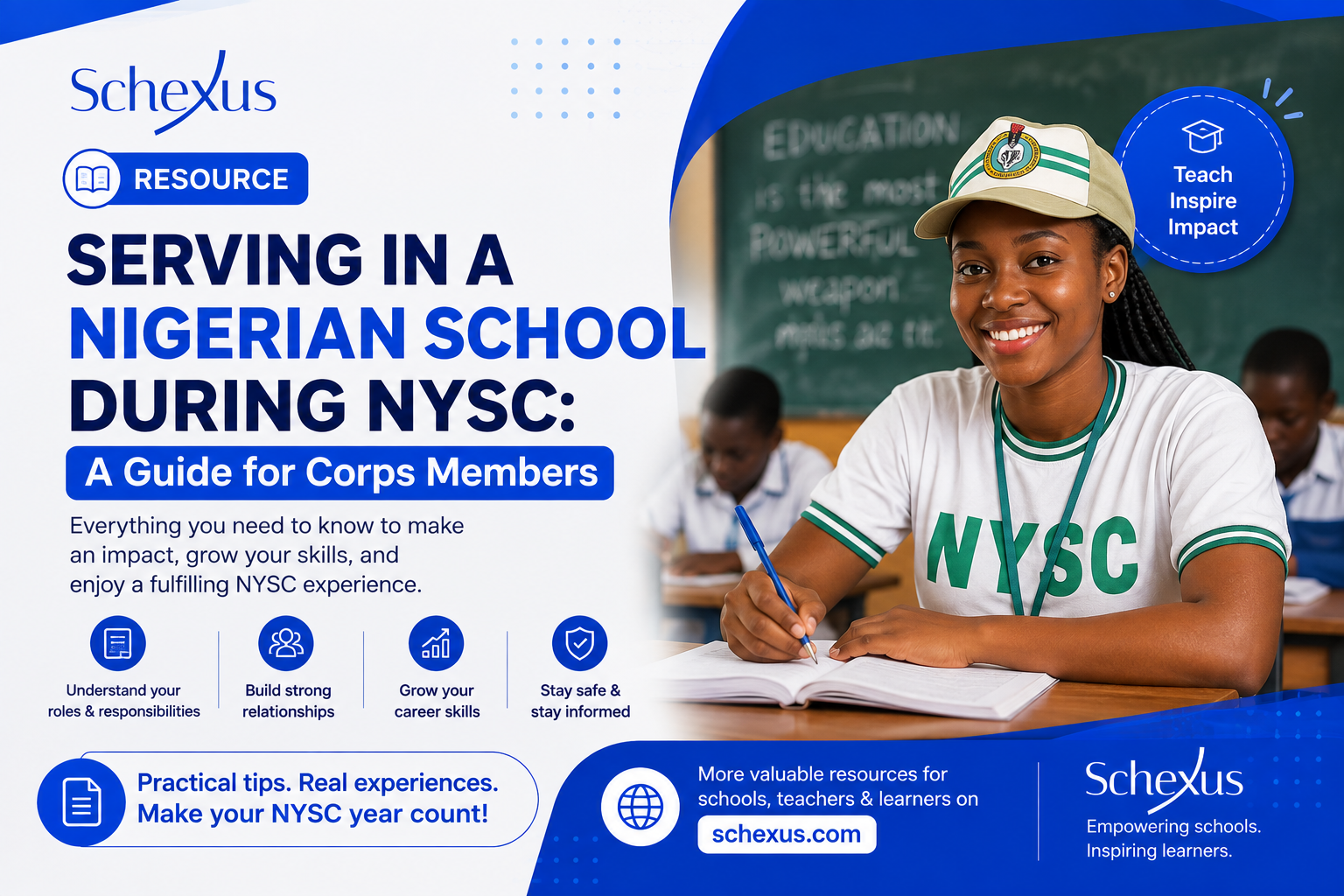
For many corps members, being posted to a school for their Primary Place of Assignment (PPA) can be an opportunity to gain practical experience, develop communication skills and contribute to students' education.
For others, especially those who did not study Education, the first few days in a school can feel unfamiliar.
You may suddenly find yourself standing in front of a classroom, working with experienced teachers and dealing with students who have different learning needs.
The good news is that you don't have to have everything figured out on your first day.
With preparation, professionalism and a willingness to learn, your time serving in a school can become one of the most valuable parts of your NYSC experience.
What does serving in a school mean?
NYSC places corps members in organisations and institutions where they carry out their Primary Place of Assignment as part of the service year.
Education is one of the areas in which corps members may serve.
When your PPA is a school, your responsibilities will depend on the school, your background, the role assigned to you and the expectations established by the relevant authorities and school management.
You may be involved in activities such as:
-
Teaching assigned subjects or classes
-
Supporting classroom activities
-
Preparing lessons and learning materials
-
Assisting with assessments
-
Participating in school activities
-
Supporting extracurricular activities
-
Working with other teachers
-
Taking part in approved administrative or educational duties
Your exact responsibilities should be clarified with the school rather than assumed.
Before you report to the school
Your first few days will be easier if you prepare before arriving.
1. Understand your assignment
Find out as much as you can about:
-
The school's location
-
Reporting arrangements
-
Your expected resumption time
-
The person you should report to
-
Your likely responsibilities
-
Documents you may need to present
If anything is unclear, ask the appropriate NYSC or school authority for clarification.
2. Learn about the school
Before your first day, take some time to understand the type of school you are joining.
Is it:
-
Primary?
-
Secondary?
-
Public?
-
Private?
-
Day school?
-
Boarding school?
The environment will influence how you approach your responsibilities.
A secondary school classroom, for example, may require a different approach from a primary classroom.
3. Refresh your subject knowledge
If you have been assigned to teach a subject you studied at university, review the relevant material.
If the subject is unfamiliar, don't pretend to know everything.
Speak with the appropriate teacher or school administrator and find out what curriculum, scheme of work or teaching materials the school uses.
Preparation will make you more confident.
Your first days in the classroom
Your first few days should be about learning as much as teaching.
Pay attention to:
-
How teachers communicate with students
-
How classrooms are organised
-
How lessons are structured
-
How attendance is handled
-
How assignments are given
-
How students respond to different teaching approaches
-
How experienced teachers manage difficult situations
You don't need to completely change the classroom on your first day.
Observe first.
Then gradually find your own teaching style within the school's expectations.
Learn from the permanent teachers
One of the biggest advantages of serving in a school is having access to teachers who already understand the environment.
Ask questions.
Learn how they:
-
Prepare lessons
-
Explain difficult topics
-
Manage classroom time
-
Assess students
-
Communicate with parents
-
Handle classroom challenges
-
Work with other members of staff
Experience is one of the best teachers.
A corps member who is willing to learn can gain valuable professional skills during the service year.
Classroom management matters
Knowing your subject is important.
Knowing how to manage a classroom is equally important.
Students have different personalities, learning abilities and levels of engagement.
Establish clear expectations from the beginning.
For example:
-
Start lessons on time.
-
Explain classroom expectations clearly.
-
Treat students respectfully.
-
Keep students engaged.
-
Avoid unnecessary confrontation.
-
Be consistent.
-
Ask questions and encourage participation.
If a classroom situation becomes difficult, don't feel that you have to handle everything alone.
Seek guidance from an experienced teacher or school administrator.
Don't be afraid to ask for help
Being a corps member does not mean you are expected to know everything.
You may encounter situations involving:
-
Difficult classroom behaviour
-
Students struggling academically
-
Unclear school procedures
-
Assessment questions
-
Parent communication
-
Administrative responsibilities
When you are unsure, ask.
It is much better to seek clarification than to make an avoidable mistake.
Take your responsibilities seriously
Your PPA is still a professional environment.
Treat your responsibilities seriously by being:
Punctual.
Arrive when you are expected to.
Prepared.
Know what you intend to accomplish before entering a classroom.
Reliable.
If you are assigned a responsibility, follow through.
Respectful.
Treat students, teachers, administrators and other staff professionally.
Accountable.
If you make a mistake, acknowledge it and learn from it.
Small habits like these can influence how people remember you long after your service year ends.
Build a professional relationship with the school
You don't need to be overly formal with everyone, but professionalism matters.
Get to know the people you work with.
Communicate respectfully.
Participate in appropriate school activities.
Be willing to contribute ideas when appropriate.
At the same time, remember that you are joining an existing organisation.
Learn the school's procedures before trying to change them.
Use technology where it adds value
Technology can make teaching and school administration easier when used appropriately.
Depending on what the school provides, you may use technology for:
-
Preparing learning materials
-
Presentations
-
Research
-
Assessments
-
Student records
-
Communication
-
Lesson planning
Don't assume that technology automatically makes a lesson better.
Use it when it genuinely helps students understand or engage with the material.
Protect student information
As a corps member working in a school, you may encounter information about students and their families.
Treat that information responsibly.
Avoid sharing private student information casually through:
-
Social media
-
Public groups
-
Unauthorised messaging channels
-
Personal posts
Student records and personal information should only be accessed or shared when there is a legitimate reason and according to the school's policies.
Make your service year more than a requirement
It is easy to think of NYSC as something you simply need to complete.
But serving in a school can give you practical experience that may be useful long after the service year ends.
You can develop skills in:
-
Public speaking
-
Communication
-
Leadership
-
Teamwork
-
Presentation
-
Classroom management
-
Planning
-
Problem-solving
-
Time management
-
Technology
These skills can be valuable even if you don't eventually pursue teaching as a career.
Keep a record of your experience
Don't wait until the end of your service year to remember what you accomplished.
Keep a personal record of significant projects and responsibilities.
For example:
-
Classes you supported
-
Subjects you taught
-
Educational projects you contributed to
-
School activities you helped organise
-
Teaching materials you developed
-
Skills you gained
-
Challenges you solved
This can help you later when updating your CV or discussing your professional experience.
If you want to pursue teaching after NYSC
Your service year can also help you determine whether teaching is something you genuinely enjoy.
Pay attention to how you feel about:
-
Working with students
-
Explaining concepts
-
Preparing lessons
-
Managing classrooms
-
Supporting students who struggle
-
Working with other educators
If you discover that you enjoy education, your NYSC experience can be a useful starting point for exploring further professional development and teaching opportunities.
For corps members who did not study Education
You don't necessarily need to have studied Education to gain useful experience from serving in a school.
Your academic background may give you strong subject knowledge, while the school environment can help you develop the ability to communicate that knowledge to students.
For example, a graduate with a background in:
-
Engineering
-
Computer Science
-
Mathematics
-
Sciences
-
Languages
-
Economics
-
Accounting
may bring valuable subject knowledge into the classroom.
The important thing is to understand the school's expectations, follow appropriate guidance and continue learning.
A practical checklist for corps members
Before and during your school assignment:
-
Confirm your PPA and reporting arrangements.
-
Understand your responsibilities.
-
Learn about the school's rules and procedures.
-
Meet the relevant school administrator.
-
Get familiar with your assigned classes.
-
Understand the curriculum or scheme of work.
-
Prepare your lessons.
-
Observe experienced teachers.
-
Ask questions when you are unsure.
-
Maintain professional conduct.
-
Respect student privacy.
-
Keep track of your contributions and achievements.
-
Make the most of the skills you develop.
Your PPA can be a learning opportunity
Serving in a school during NYSC can be much more than simply completing an assignment.
It can give you the opportunity to stand in front of a classroom, work with experienced educators, understand how schools operate and develop skills that can remain useful throughout your career.
You don't have to arrive knowing everything.
Be prepared. Be willing to learn. Treat people with respect. Take your responsibilities seriously.
By the end of your service year, you may leave the school with much more than a completed assignment, you may leave with experience, confidence and a clearer understanding of what you can contribute to education.
Official NYSC information
For current information about NYSC deployment, service requirements and official procedures, corps members should rely on the National Youth Service Corps and other authorised NYSC communications rather than unofficial information circulating online.