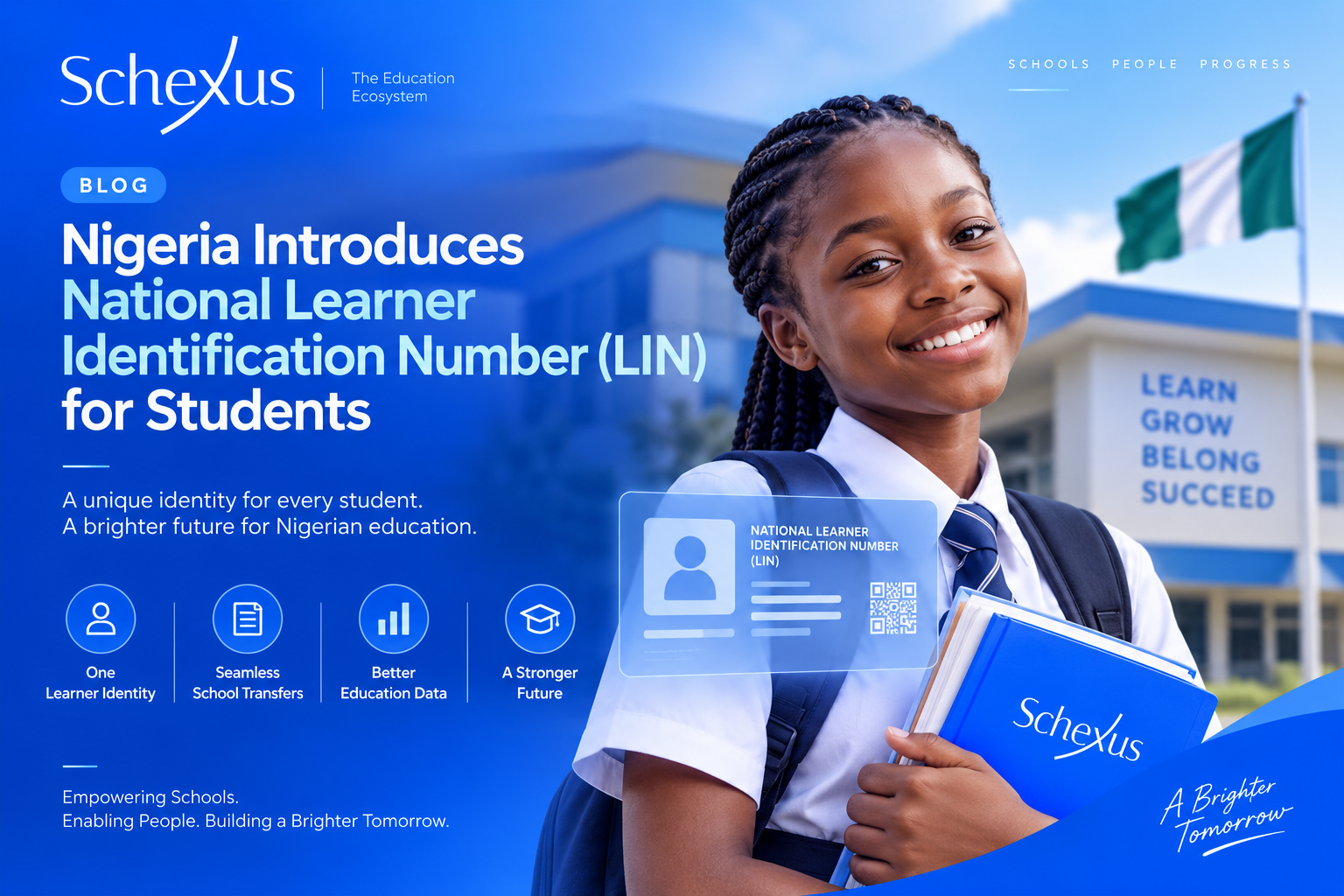
The Federal Government of Nigeria has introduced the National Learner Identification Number (LIN) for students across the country, marking an important step toward building a more connected and data-driven education system.
The initiative, announced by the National Orientation Agency (NOA), is designed to provide learners with a unique identity within the Nigerian education system and improve the way student information is managed across schools and educational institutions.
For decades, student records in Nigeria have largely existed within individual schools, local government areas and different education databases. This fragmentation can make it difficult to maintain a continuous record of a learner when they transfer between schools or relocate to another part of the country.
The introduction of LIN is intended to address this challenge.
What Is the National Learner Identification Number?
The National Learner Identification Number is a unique identifier assigned to a learner within Nigeria's education system.
The idea is simple: rather than a student's identity being tied only to a particular school, the learner can have a consistent identity that remains with them throughout their educational journey.
A student who starts primary school in Akwa Ibom, moves to another state and later continues secondary education elsewhere could potentially retain the same learner identity.
This creates the foundation for a more continuous education record.
Why Learner Identity Matters
A reliable learner identity can help answer important questions about Nigeria's education system.
How many learners are currently enrolled?
Where are they enrolled?
How many students transfer between schools?
How many leave the education system before completing their studies?
What happens to students who disappear from one school's records?
Which regions have the highest dropout rates?
Where are additional educational resources required?
Without reliable and connected learner data, answering these questions accurately becomes difficult.
LIN provides an important foundation for connecting information around individual learners while supporting broader education planning and administration.
Beyond a Number
The real value of LIN will not come from the identification number itself.
Its value will come from the ecosystem built around it.
A learner identity can potentially connect different aspects of a student's educational journey, including admission, school transfers, academic progression, assessments and results.
This could create a model where a learner's journey looks like:
Learner Identity → School → Class → Assessment → Results → Progression → Transfer → Graduation
Instead of having disconnected records scattered across different institutions, education stakeholders can work toward a more structured and continuous view of each learner's journey.
What Does LIN Mean for Students?
For students, the introduction of LIN could make educational records more portable and easier to manage.
Students frequently move because of family relocation, changes in employment, financial circumstances or other reasons.
When records are entirely school-dependent, transferring can sometimes involve collecting physical documents, requesting transcripts or recreating information.
A persistent learner identity can make the transition between institutions more seamless.
Over time, it could also support easier verification of academic achievements and educational credentials.
What Does It Mean for Schools?
Schools will become an important part of the implementation of the LIN system.
The quality of a national learner identification system depends heavily on the quality of the information entered into it.
Schools will therefore need to pay greater attention to the accuracy, consistency and security of student records.
This means maintaining reliable information such as:
Student names
Date of birth
Admission information
School history
Class progression
Assessment records
Academic results
Transfer records
Graduation information
Digital school management systems will become increasingly important in helping schools maintain and manage these records efficiently.
A New Opportunity for Education Technology
The introduction of LIN also highlights the growing importance of interoperability in Nigerian education technology.
Schools should not have to operate as isolated digital islands.
A modern education ecosystem should allow authorised systems to communicate securely with one another.
For example, a school management platform could manage day-to-day activities such as student registration, attendance, assessments, results, fees and communication while connecting with approved national or state education infrastructure where required.
This creates a more connected education environment.
Supporting Better Education Planning
One of the biggest potential benefits of a national learner identity is improved education data.
Government cannot effectively plan what it cannot accurately measure.
With better learner data, education authorities could gain deeper insight into enrolment, student mobility, progression and dropout patterns.
This could help policymakers determine where schools are needed, where infrastructure is insufficient and where interventions should be targeted.
It could also make it easier to measure whether education programmes are producing meaningful outcomes.
Instead of focusing only on how much was invested in education, policymakers can increasingly focus on what happened to learners as a result of those investments.
Tackling the Challenge of Student Dropout
LIN could also become an important tool for identifying learners who leave the education system.
Consider a student who completes primary education but does not appear in secondary school records.
A connected education system could help distinguish between a student who transferred to another school and one who actually dropped out.
That distinction is critical.
If the system can identify learners who have genuinely disappeared from education, authorities and other stakeholders can potentially intervene earlier.
This could contribute to efforts to reduce Nigeria's out-of-school population.
The Importance of Data Protection
While the introduction of LIN presents significant opportunities, learner identity must be handled responsibly.
Students' educational information is sensitive and should not become freely accessible simply because a learner has a national identification number.
There must be clear rules around:
Who can access learner information
What information can be accessed
Why the information is being accessed
How information is stored
How records are corrected
How data is protected
How unauthorised access is prevented
The objective should be secure educational continuity, not unrestricted surveillance of learners.
The Future of Verifiable Educational Records
A national learner identity could eventually support a broader system of verifiable educational credentials.
Imagine a future where a student can securely prove their educational history without relying entirely on physical documents.
A university could verify a student's secondary school results.
A scholarship provider could verify academic performance.
An employer could verify educational qualifications.
A student transferring between schools could have their educational history securely recognised.
This could significantly reduce the challenges associated with lost documents, fraudulent certificates and difficult verification processes.
What Schools Should Do Now
Schools should begin preparing for a more digitally connected education system.
They should ensure that student records are accurate, properly organised and securely maintained.
Schools should also begin reducing their dependence on fragmented spreadsheets and paper-based records where possible.
A strong digital foundation will make it easier for schools to integrate with future education infrastructure.
Most importantly, schools should recognise that data accuracy is becoming an educational responsibility.
An incorrect name, date of birth or duplicated student record can create problems that follow a learner throughout their educational journey.
The Bigger Picture
The National Learner Identification Number should be viewed as more than another government education initiative.
It represents a shift toward building a digital identity infrastructure for Nigerian learners.
The long-term vision could be an education system where learners can be securely identified, their educational journeys can remain connected, institutions can exchange authorised information, and policymakers can make decisions using better data.
But the success of LIN will ultimately depend on implementation.
Technology alone cannot solve Nigeria's education challenges.
Reliable infrastructure, trained personnel, accurate data, strong governance, cybersecurity and cooperation between federal, state and local education stakeholders will all be necessary.
A learner identification number can identify a student.
A connected education ecosystem can help understand and support that student's journey.
Nigeria's introduction of LIN is therefore an important step toward a more connected education system—one where the learner, rather than the individual school database, becomes the centre of the educational record.
The next phase will be turning that identity into meaningful educational continuity, better decision-making and better outcomes for millions of Nigerian learners.