
Nigeria’s Accelerated Teacher Professionalisation Pathway: What Schools and Teachers Need to Know
Nigeria is taking another step toward strengthening the teaching profession through the Accelerated Teacher Professionalisation Pathway (ATPP), a national initiative designed to help serving teachers without formal professional education qualifications become qualified, certified and eligible for professional registration.
For schools, this development goes beyond individual teacher certification. It highlights an increasingly important responsibility for school administrators: knowing who is teaching, what qualifications they hold, their professional status, and how they are progressing professionally.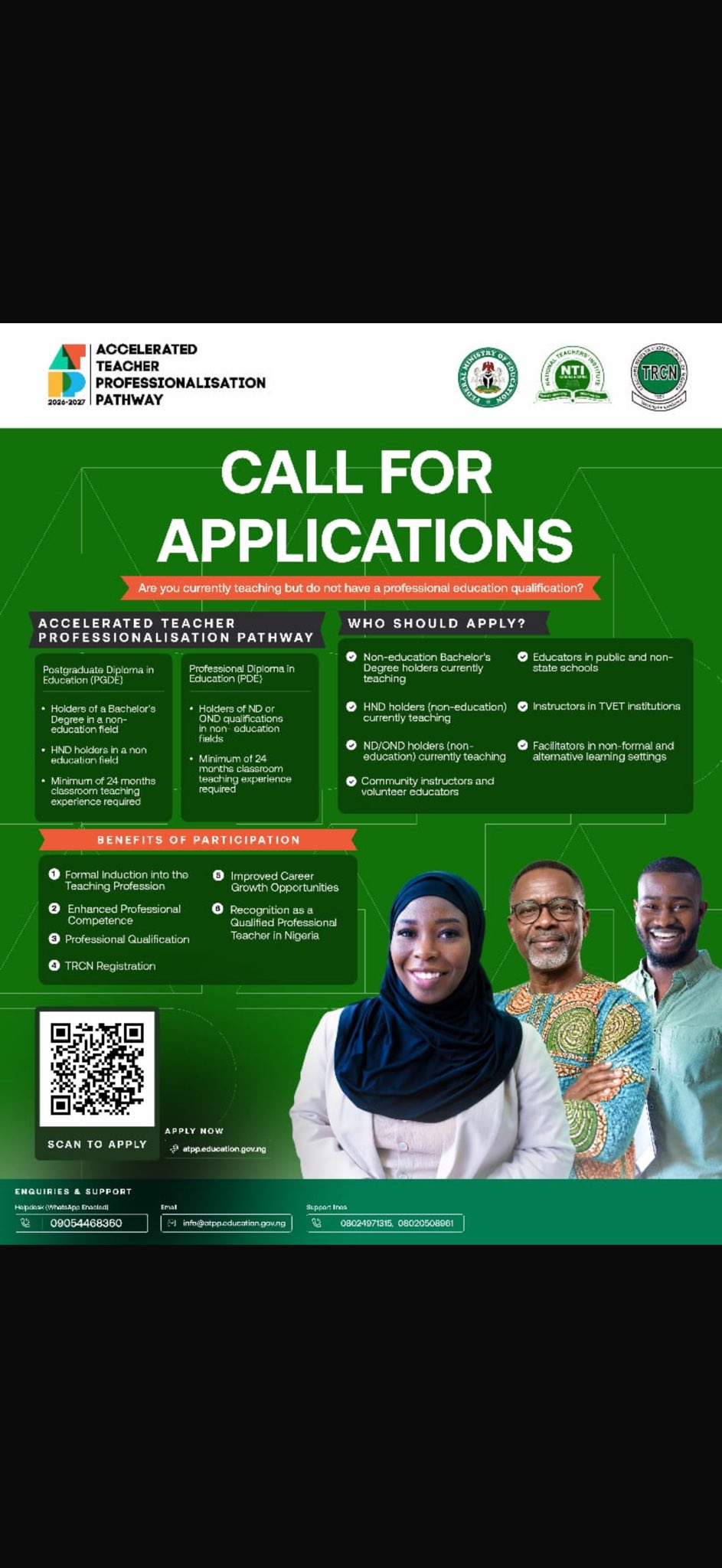
What Is the Accelerated Teacher Professionalisation Pathway?
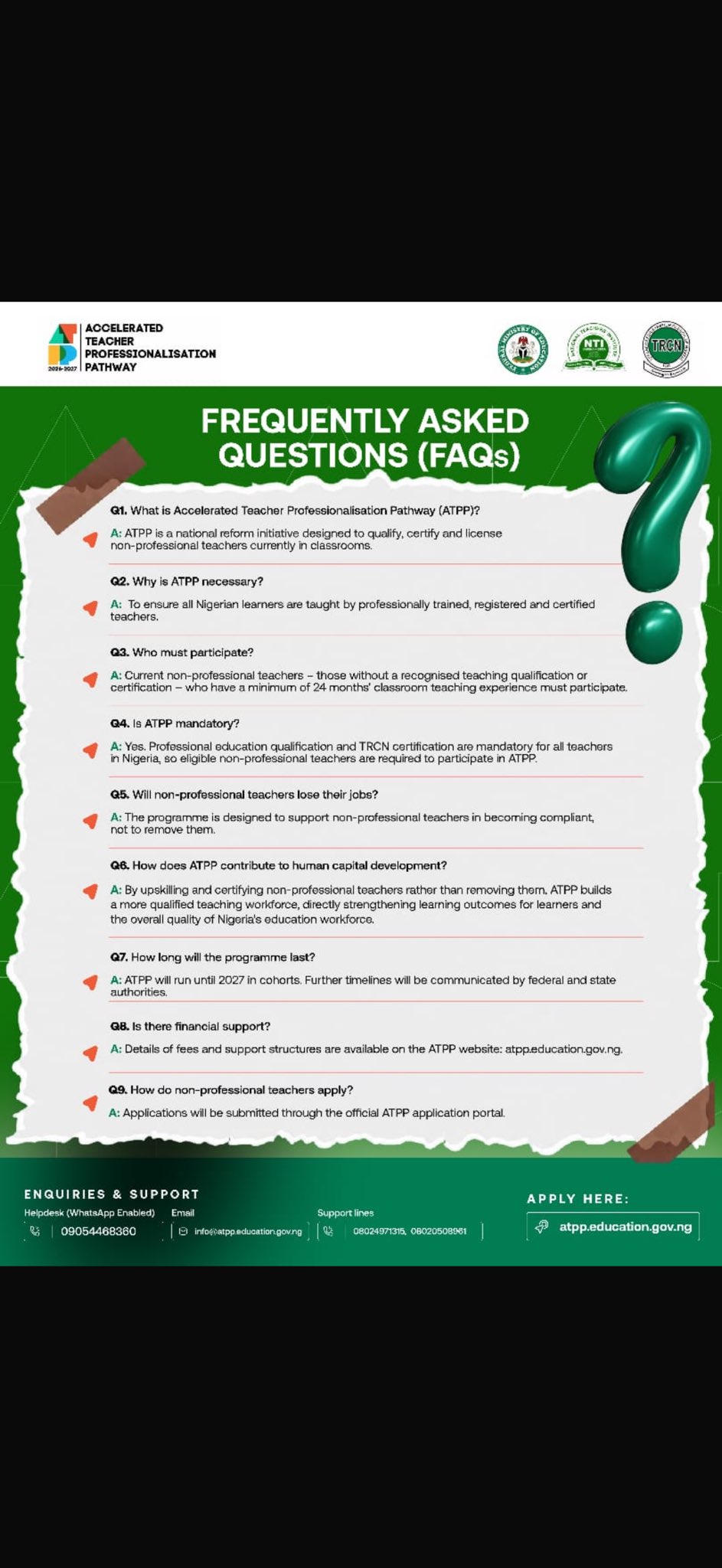
The ATPP is a national professionalisation pathway for teachers who are already serving in classrooms but do not yet have formal professional education qualifications.
According to the official ATPP platform, the programme is being implemented through the Federal Ministry of Education, the National Teachers' Institute (NTI), and the Teachers Registration Council of Nigeria (TRCN). Its stated objectives include strengthening teacher competence, standardising professional qualifications and supporting teachers toward professional certification and licensing. (ATPP)
Importantly, the programme is presented as a pathway for professional development rather than simply a punitive measure against teachers who currently lack professional teaching qualifications. (ATPP)
Who Can Apply?
The programme is aimed at non-professional teachers currently working in different education settings.
The official ATPP information identifies groups including:
Teachers with non-education Bachelor's degrees who are currently teaching
HND, ND and OND holders currently teaching
Teachers in public and non-state schools
Teachers in ECCDE, primary and secondary education
TVET instructors
Community instructors and volunteer educators
Facilitators in non-formal and alternative learning settings
The qualification pathway depends on the applicant's existing academic qualification.
PGDE Pathway
The Postgraduate Diploma in Education (PGDE) is available to eligible holders of a non-education Bachelor's degree or HND, subject to the programme's experience requirements.
PDE Pathway
The Professional Diploma in Education (PDE) is designed for eligible ND/OND holders currently teaching.
Both pathways are structured around six months of study, combining hybrid coursework with supervised teaching practice. (ATPP)
Why This Matters to Schools
Teacher professionalisation is not only a concern for individual teachers.
It also creates a need for schools to maintain accurate and up-to-date staff records.
A school administrator should be able to answer questions such as:
Which teachers currently work in the school?
What academic qualifications does each teacher have?
Does the teacher have a professional teaching qualification?
What is their TRCN status?
Which teachers are currently undergoing professional training?
When did a teacher's professional development begin?
What training has each teacher completed?
Which staff members require further development?
Are staff records ready for inspection or reporting?
When these records are maintained manually across files, notebooks and spreadsheets, keeping them accurate can become difficult.
This is where digital school administration becomes increasingly important.
Professionalisation Should Be Supported by Better School Management
The success of teacher professionalisation ultimately depends not only on training teachers, but also on schools having systems capable of managing the professional journey of their workforce.
A modern school management system should help administrators maintain structured staff profiles containing information such as:
Staff Profile → Academic Qualifications → Professional Qualifications → Certifications → Training → Performance → Employment History
This creates a clearer picture of the school's teaching workforce.
It also gives school management better information for planning staff development, recruitment and compliance activities.
Where Schexus Fits In
At Schexus, we believe school technology should go beyond student records and fee management.
A school is also a workforce.
Teachers and other staff need to be properly documented, managed, evaluated and developed throughout their employment journey.
Schexus provides schools with a centralised platform for managing important school operations, including staff management, student management, academic records, assessments, attendance, finance and reporting.
With structured staff records, schools can maintain important information about their teachers and make it easier for administrators to monitor professional development and organisational requirements.
The goal is simple:
Better information helps school leaders make better administrative decisions.
From Teacher Records to Education Quality
Teacher professionalisation is ultimately about what happens in the classroom.
When schools have accurate workforce information, they are better positioned to identify training needs, plan staff development and maintain proper documentation.
When teachers receive professional development, the benefits should extend beyond certification to classroom practice, assessment, safeguarding, pedagogy and learner outcomes.
The ATPP itself identifies areas such as professional knowledge, professional practice, professional values and ethics, assessment and quality assurance, digital learning, inclusive education and subject methodology among its professional domains and learning areas. (ATPP)
This reinforces an important point for school leaders:
Teacher development and school management should not exist as separate activities.
They should form part of a continuous system for improving the quality of education.
A Call to School Administrators
If your school has teachers who may qualify for the ATPP, this is an opportunity to begin reviewing your staff records.
School administrators can start by:
Reviewing the qualifications of every teaching staff member.
Identifying teachers without professional education qualifications.
Confirming the professional status of staff where applicable.
Encouraging eligible teachers to explore the ATPP pathway.
Keeping records of staff training and professional development.
Digitising staff records to make future monitoring and reporting easier.
The official ATPP website currently states that Cohort 1 applications close on 25 September 2026. Teachers and schools should rely on the official ATPP platform for the latest eligibility, application and programme information. (ATPP)
Visit the official ATPP website
The Future of School Administration Is Digital
As Nigeria continues to strengthen education standards, schools will increasingly need reliable information about their teachers, students and operations.
Teacher professionalisation is one part of that broader transformation.
The next step is ensuring that schools have the digital infrastructure to record, manage, monitor and act on that information.
That is the role technology should play in education and not replacing school leaders, but giving them the information and tools they need to manage their schools more effectively.
Schexus is building that digital foundation for modern schools.